
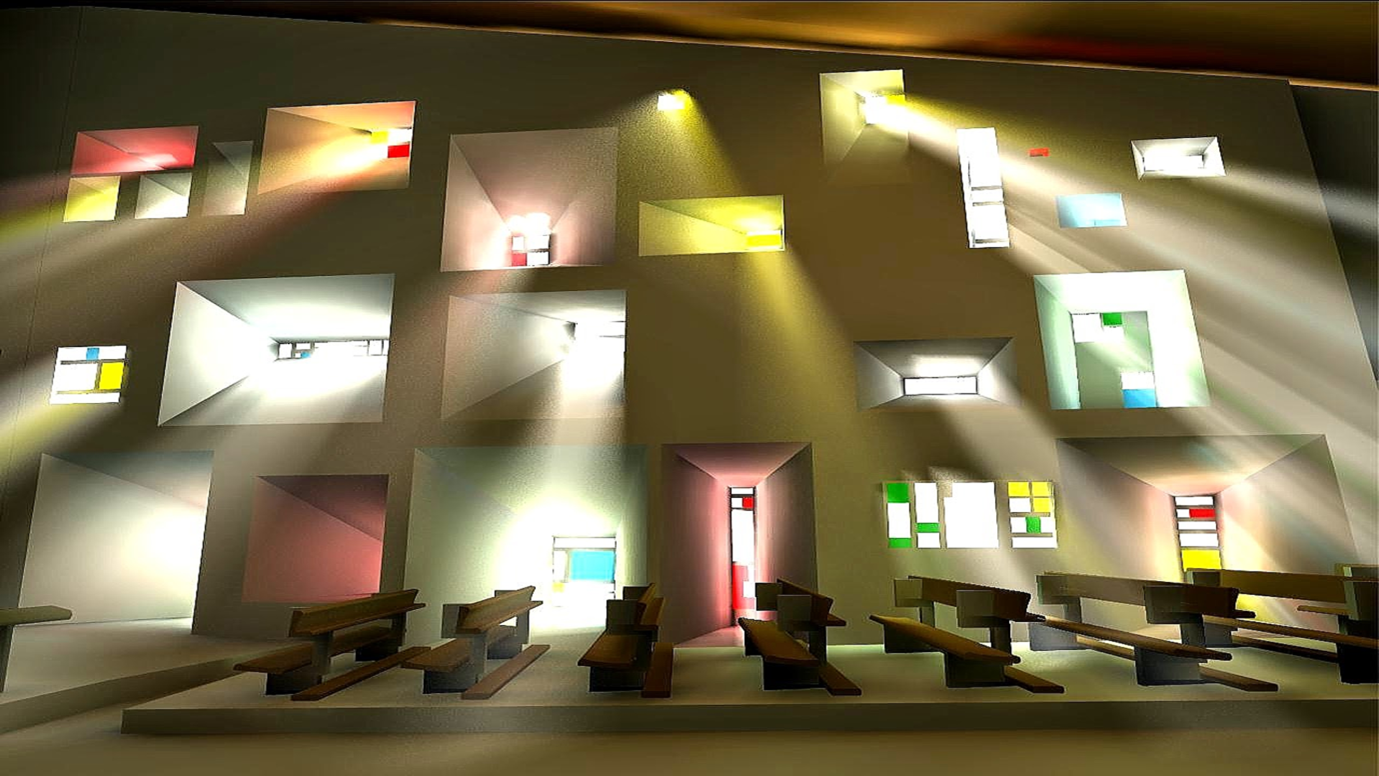
Patrick Dormoy’s introduction to the world of architecture and design came with a revelation, one that was as spiritual as it was visual. In the early 1960s, during his first visit to Le Corbusier’s chapel of Notre Dame du Haut, perched on a hill near Ronchamp in eastern France, he experienced the profound extent to which the spiritual can be swayed by the tangible.
On that day, light was playing at its best. It animated the chapel’s curvaceous exterior walls and entered the interior through irregular openings carved into the structure. The experience revealed something deeper still: that beyond form and material, it is often the intangible choreography of light that moves the soul.
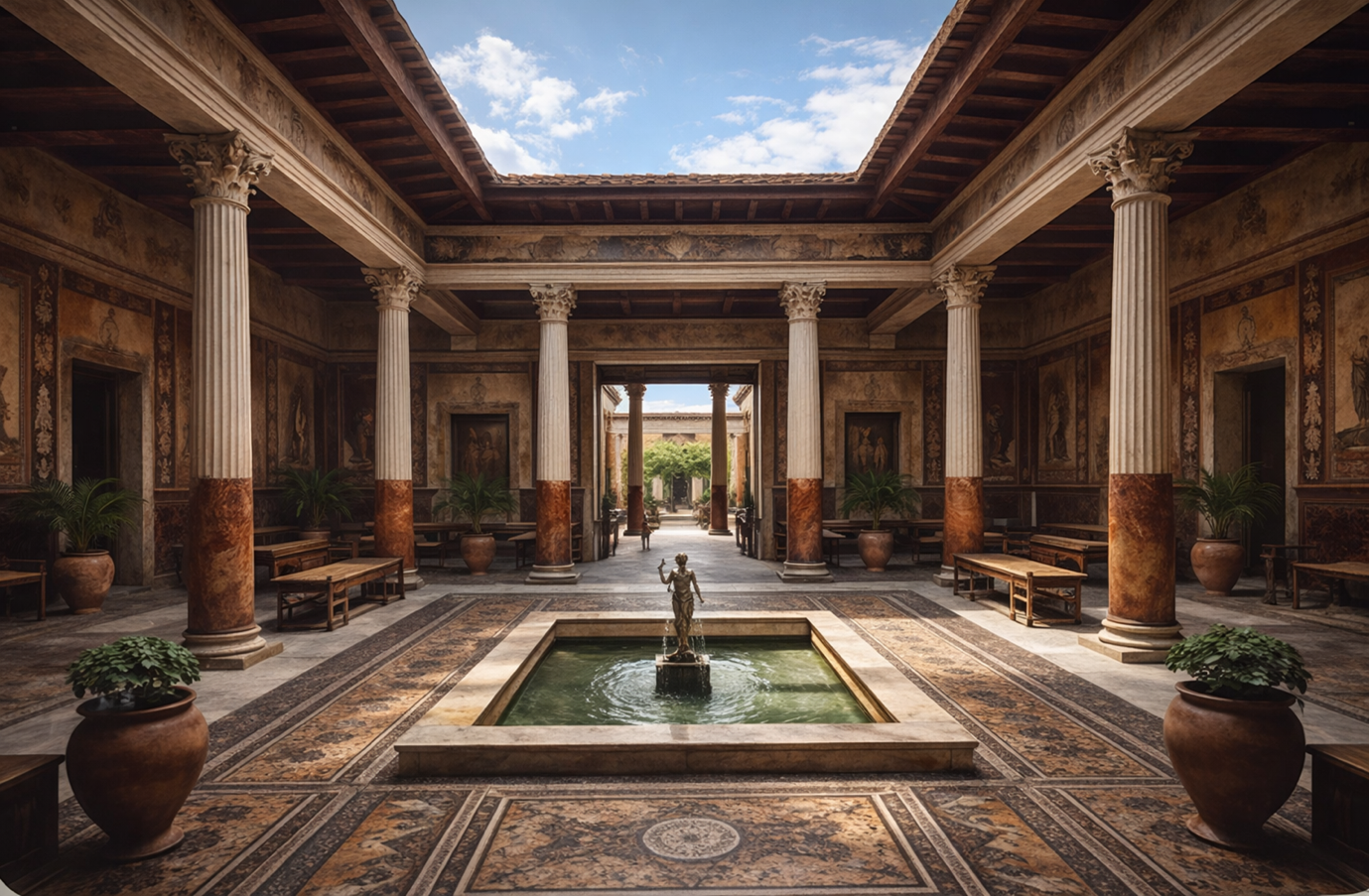
The name Atrium was chosen with meaning. In ancient Rome, the atrium was the heart of the patrician villa, the central room from which all others radiated. It was a space for life, exchange, and status, often open to the sky or pierced by a permanent opening in its ceiling, making it the best illuminated room in the home. Light was essential to its purpose.
Since its inception in 1976, Atrium has sought to work with high end brands where design and quality coexist as core values. That conviction has never changed. What has evolved over time is our focus
For the first twenty years or so, Atrium was involved in both furniture and lighting, primarily importing and distributing modern furniture with the inclusion of one or two smaller lighting brands. As the 1990s unfolded, however, the rapid and fascinating evolution of lighting technology began to assert itself. Gradually, lighting outperformed furniture, not only commercially, but intellectually.
By 2005, Atrium reached a decisive pivot point. We committed fully to lighting alone. It was a strategic realignment, but also a natural one, and one we have never looked back from.
Over the past two decades, lighting has evolved dramatically. The shift from analogue to digital light sources has generated an explosion of new possibilities, alongside growing technical complexity driven by contemporary architectural demands. This complexity has only deepened our desire to learn. Today, Atrium sits at the junction between application and science, lighting specialists with a deep understanding of how light interacts with architecture, biology, and human experience.
Our journey has not always been straightforward. Spanning five decades and weathering several unforgiving recessions, we have had to adapt, change course, and respond to new economic environments, always with the determination not to forfeit our founding values. Along the way, we have been fortunate to work with brilliant people, including past colleagues, many of whom remain friends and collaborators to this day.
At the time of our inception, we had no business plan — largely because we did not know such a tool existed. What we did have was a set of guiding principles, which remain as relevant today as they were in 1976, perhaps even more so:
By a poetic twist of fate, the space we now operate in aligns even more closely with our name. In Roman villas, the atrium was open to the sky, the brightest, best‑illuminated place in the home.
Our connection to light was formed in the founding moments of Atrium, shaped by an early spiritual awakening to what can happen when light and architecture come together to move the soul. That connection has guided us ever since.
GET MORE INSPIRATION
Illuminating Education: Designing Lighting Schemes for Focus, Comfort, and Well-being
Atrium and Flos Strengthen Exclusive UK Retail Partnership
Modular Lighting: A Sustainable Approach
Designing Outdoor Lighting for Dark Skies