
In a world increasingly shaped by environmental urgency and human-centred design, lighting is more than illumination, it’s a key to sustainable, health-promoting spaces. The convergence of circular economy principles and salutogenic design is reshaping how we think about lighting from the materials we use to how long luminaires last, and how we measure their true environmental impact.
Circular design goes beyond energy efficiency. It’s about designing luminaires that are made to last, made to be repaired, and made to come apart so their materials can go back into the loop. This approach reduces waste, conserves resources, and limits environmental impact from the earliest stages of product development.
Our brands like alphaLED, Fluxwerx, Intra Lighting and Luxxbox are leading the way in embedding circularity into lighting design. These companies embrace disassemblable, modular product design, use recyclable or recycled materials, and prioritise non-toxic components. But more than that, they integrate these principles without compromising the aesthetics or performance that define architectural lighting today.

In the context of salutogenic design, which focuses on supporting human health and well-being, materiality is a key consideration. The materials that make up our lighting should not emit harmful VOCs or contain substances that compromise indoor air quality. They should feel natural, honest, and contribute to an environment that nurtures well-being.
Luxxbox, for example, has redefined the acoustic pendant by using recycled PET felt material that not only softens sound but also supports visual warmth and ecological responsibility. Meanwhile, Fluxwerx prioritise materials that are responsibly sourced and easily reclaimed, moving towards a future where lighting contributes to regenerative rather than extractive design.

Longevity is the unsung hero of sustainable design. A product that lasts twice as long inherently halves its lifecycle impact. Circular lighting design encourages long-life luminaires that resist obsolescence through their modularity and ease of upgrade. Think: replaceable light engines, serviceable drivers, and universal mounting systems.
Fluxwerx’s products are engineered with simplicity and modularity in mind, enabling upgrades rather than replacements, a clear nod to both circularity and user wellbeing.
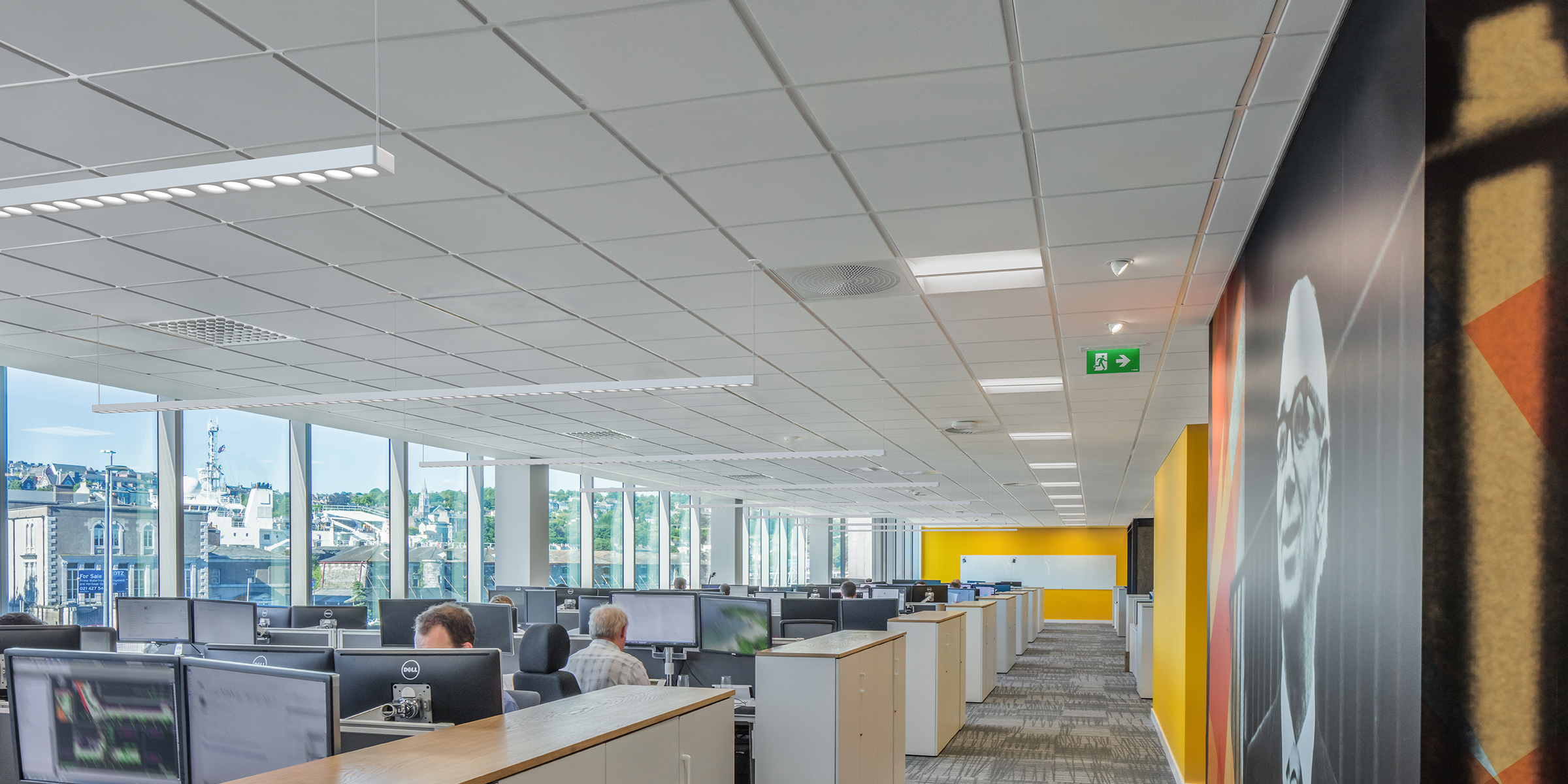
For the industry to shift meaningfully towards circularity, we need robust metrics. Enter TM65 and TM66, frameworks developed by the Chartered Institution of Building Services Engineers (CIBSE) to evaluate the embodied carbon and circular economy performance of lighting products.
TM65 provides a method for estimating embodied carbon where Environmental Product Declarations (EPDs) are unavailable, which is crucial for making informed material and product choices during early design stages.
TM66 introduces the Circular Economy Assessment Method (CEAM), enabling manufacturers and specifiers to score lighting products on circular design factors such as ease of disassembly, serviceability, and material origin.
Intra Lighting is a leader in the industry when it comes to TM65 and TM66 principles. They demonstrate a profound commitment to sustainability and circularity, embedding these principles throughout their production facilities and manufacturing processes. Operating from three European plants in Slovenia, Croatia, and Serbia, the company ensures 100% controlled production, emphasising high-quality standards and environmental responsibility. They utilise green energy, with plans to achieve 100% solar power by 2025, and employ advanced waste management systems to minimise their environmental impact. Additionally, the company incorporates rainwater harvesting at its facilities, further showcasing its dedication to sustainable practices.
Salutogenesis isn’t just a buzzword, it’s a philosophy rooted in creating spaces that actively promote human health. Lighting that adheres to circular principles inherently supports salutogenic outcomes: fewer toxins, less waste, better air quality, and lower environmental stress.
But it’s also about experience. Quality lighting design, like the diffused daylight mimicry of Fluxwerx‘s luminaires, or the acoustic and emotional comfort provided by Luxxbox‘s solutions, supports cognitive clarity, mood regulation and social connection.
As designers, manufacturers, and specifiers, we have a responsibility and an opportunity to light a better path forward. When we embrace circularity not as an afterthought but as a design imperative, we create lighting that lasts longer, feels better, and does less harm.
Let’s keep designing for light that lasts, heals, and gives back.
GET MORE INSPIRATION
Illuminating Education: Designing Lighting Schemes for Focus, Comfort, and Well-being
Atrium and Flos Strengthen Exclusive UK Retail Partnership
Modular Lighting: A Sustainable Approach
Designing Outdoor Lighting for Dark Skies