
This week, our London Showroom hosted “The Meaning of Light”, a captivating masterclass exploring the science of light and its profound implications for health, well-being, and building design. Curated by Workplace Trends, the event featured compelling talks by industry experts:
with Nigel Oseland, environmental psychologist and workplace strategist, moderating a thought-provoking panel discussion. The event also offered attendees valuable CPD (Continuing Professional Development) points and networking opportunities.
Guests enjoyed refreshments and mingled in our stunning showroom before the talks commenced. Nigel Oseland then warmly welcomed everyone and introduced the speakers and the topics to be explored.
Ulysse Dormoy, with over 35 years of experience in the lighting industry, began by illuminating the science of light. He passionately addressed the growing issue of daylight deficiency due to our increasingly indoor lifestyles. His passion for health and well-being led him to recognise the power of light in shaping the built environment. Ulysse highlighted research on the link between indoor living and Vitamin D deficiency, and introduced the concepts of infrared light and mitochondria, which would be further explored by the following speakers. He concluded by challenging the built environment industry to critically examine its understanding of light and integrate scientific knowledge into design practices.
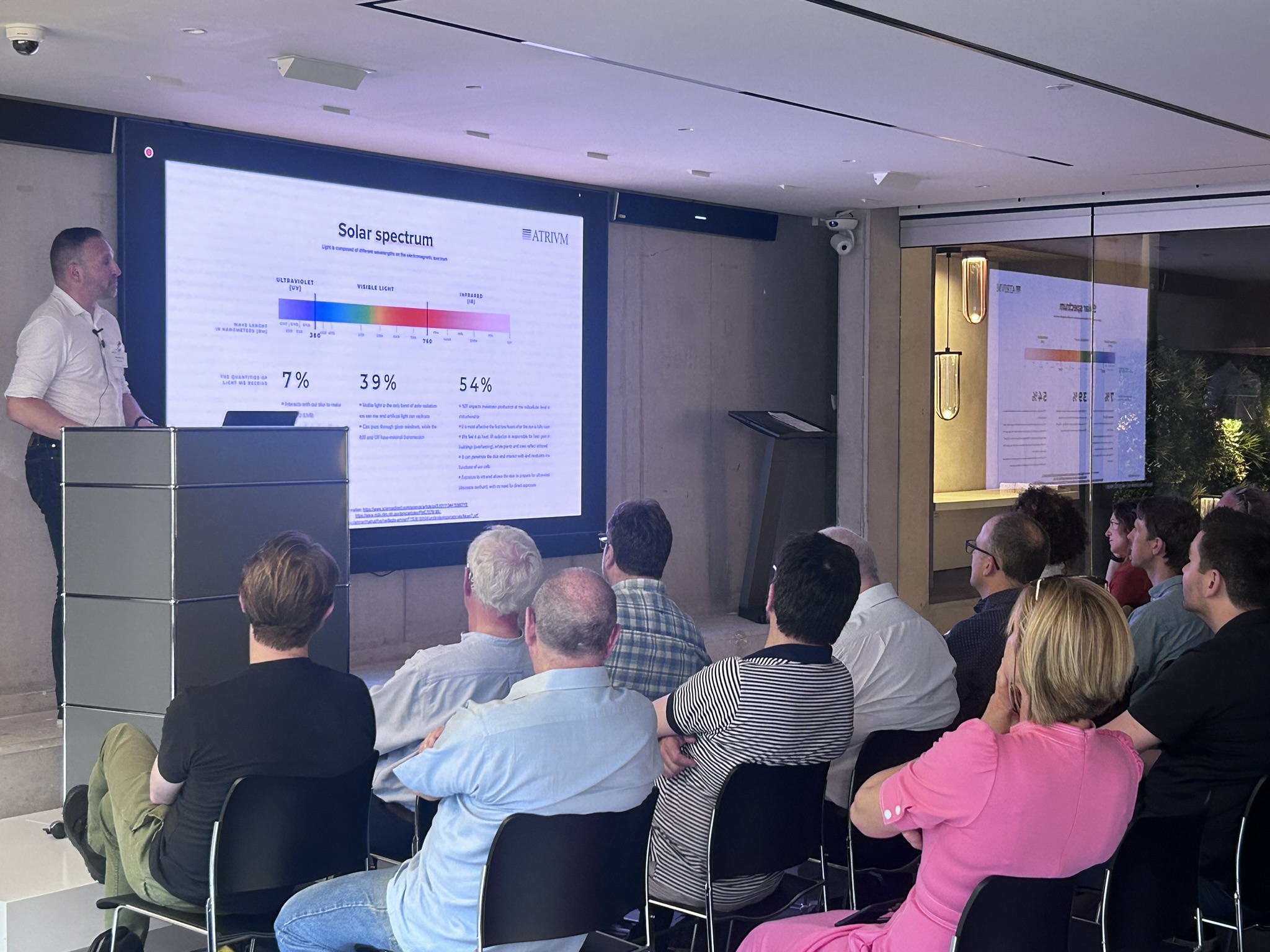
Following Ulysse, Professor Bob Fosbury presented a unique perspective on light. He explained how light, comprised of individual particles called photons, has a profound impact on all living things. Professor Fosbury emphasised that light is essential for life on Earth, as it fuels photosynthesis, the process by which plants produce oxygen, a vital component for all life forms.
Highlighting the detrimental effects of light deprivation, he discussed the challenges faced by astronauts and submariners who lack exposure to full-spectrum light. He explained how this lack, particularly of near-infrared light, can lead to mitochondrial dysfunction. Professor Fosbury concluded by encouraging attendees to spend time outdoors in nature, as plants reflect abundant near-infrared light, vital for our health. He proposed that the next step for the building industry should be to develop methods for replicating full-spectrum lighting indoors, thereby addressing light deprivation and mitochondrial dysfunction.
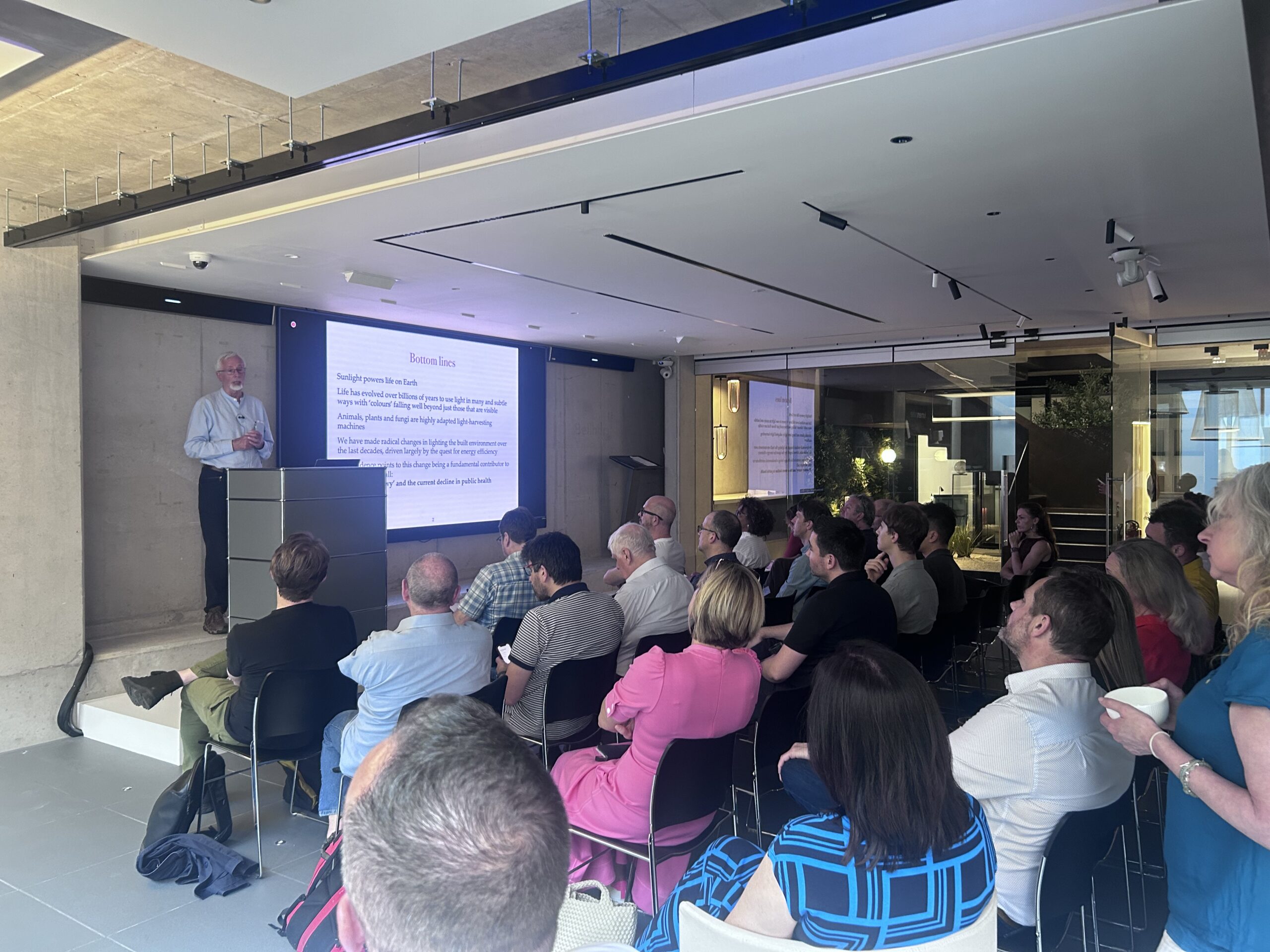
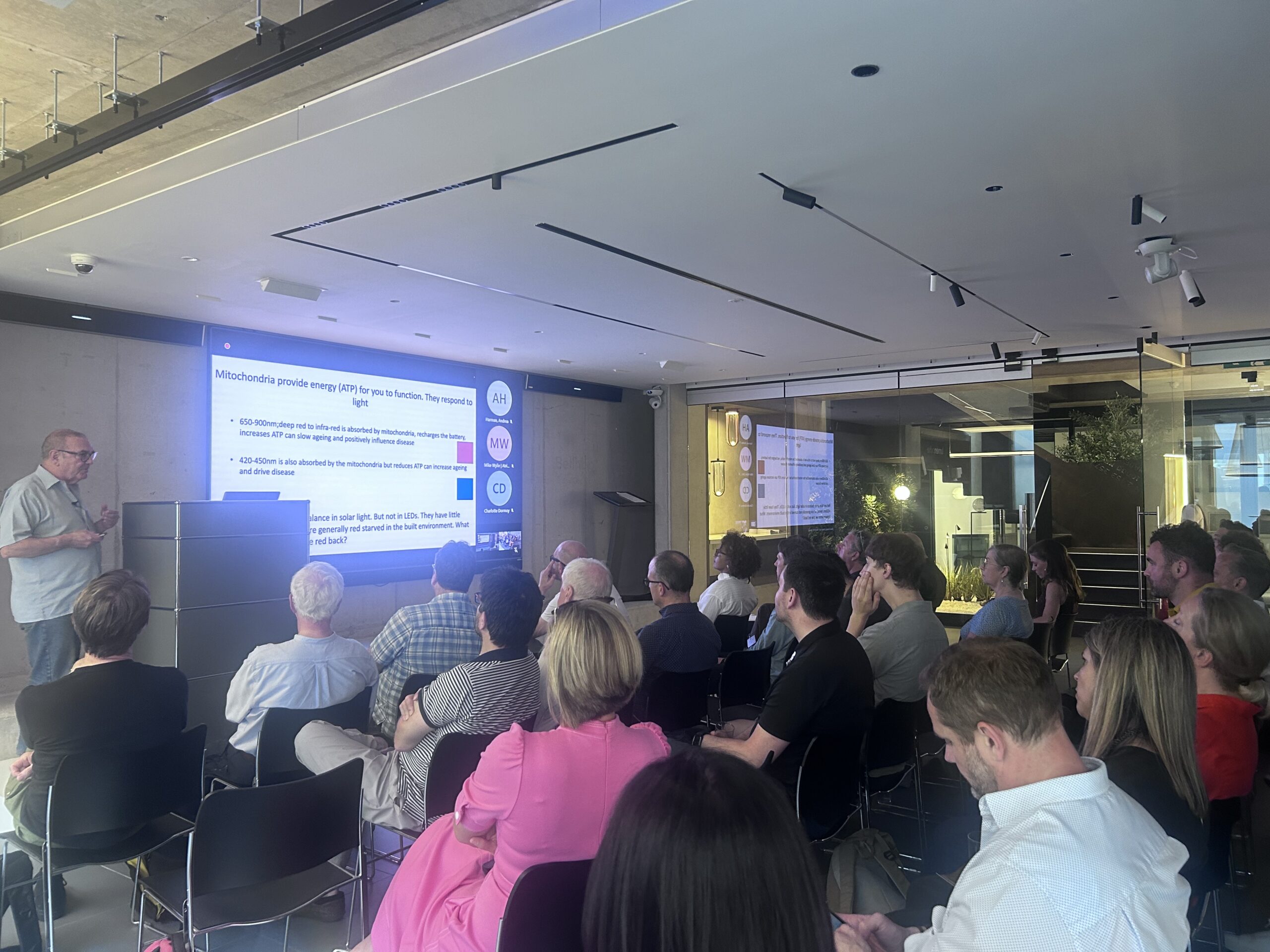
The final speaker, Professor Glen Jeffery, delved deeper into the critical role near-infrared light plays in our health, particularly its impact on mitochondrial function. Drawing on his research and studies by others, he revealed that a lack of infrared light can have severe consequences, including increased mortality rates. Professor Jeffery explained that mitochondria, the “powerhouses” within our cells, regulate aging and are crucial for disease recovery. He emphasised the importance of near-infrared light in stimulating mitochondria, potentially promoting healthy aging and reducing the risk of Parkinson’s disease, dementia, and diabetes. He warned that our increasingly indoor lifestyles, with limited exposure to the shorter wavelengths of light found indoors, are creating a public health issue of “red-light starvation”. Professor Jeffery echoed the sentiment of the previous speakers, urging design professionals to prioritise the impact of lighting choices on human health when designing indoor spaces.
The event sparked lively discussions during the Q&A session. Attendees, including lighting designers and architects, posed insightful questions. The panel, with Ulysse, Bob, Glen, and Nigel engaging in a stimulating exchange, addressed several crucial topics:
The panel discussion allowed the speakers to seamlessly combine their expertise, offering a comprehensive perspective.
The event concluded with a social hour where attendees enjoyed refreshments and networked with the speakers on a personal level. We were truly inspired by the insightful conversations and the knowledge shared by our esteemed speakers.
We extend our sincere gratitude to Workplace Trends and all attendees, and we look forward to witnessing how you incorporate this newfound awareness of “The Meaning of Light” into your future projects.
GET MORE INSPIRATION
Illuminating Education: Designing Lighting Schemes for Focus, Comfort, and Well-being
Atrium and Flos Strengthen Exclusive UK Retail Partnership
Modular Lighting: A Sustainable Approach
Designing Outdoor Lighting for Dark Skies